Sukumo is a very specific type of processed indigo that can be turned into a dye vat that will produce blue dye even in cold weather. This is far from the only type of indigo dyeing process that was used before the modern era, including on the islands that make up present day Japan. The techniques for creating and using it developed in medieval Japan by the mid 1500’s, though the technique is commonly associated with the Edo period because of the more prominent role indigo dyed textiles took on during that time. The ability to build a dye vat at any time of year using sukumo represented a significant advance in dye technology, as earlier methods required warm weather to maintain a usable vat.
Sukumo starts in the cultivation of the indigo. It is made of the specific plant Persicaria tinctoria, which is sometimes called Japanese Indigo or Dyer’s Knotweed. Seeds are started in March, grown out in sunny low lying fields with rich soil that gets regular water. While the plants themselves are tolerant of deviation from these conditions, these specific details produce a higher level of the dye compound in the leaves. Leaves can be harvested at least twice during the growing season, with those harvested just before flowering containing the most dye.
The process of sukumo is best started in the fall. The year’s last harvest of indigo leaves are laid out to dry for around two days. These dried leaves are then piled together, sprinkled with water, covered, and left to partially decompose. For 100 days, this pile of leaves needs to be checked daily, turned periodically, and occasionally watered again. A successful sukumo pile will grow a kind of white mold, develop a notable smell of ammonia, and the temperature of the pile will rise enough that it begins to give off steam. Sukomo will only be created if the pile of indigo leaves is large enough to create enough heat as it breaks down.
Once the sukumo is ready, it can be turned into a vat by mixing it with wood ash, water, and a sprinkle of lime to create a fermentation vat. The vat should be stirred and tested daily until it begins transferring a stable blue, which may take anywhere from several days to weeks.
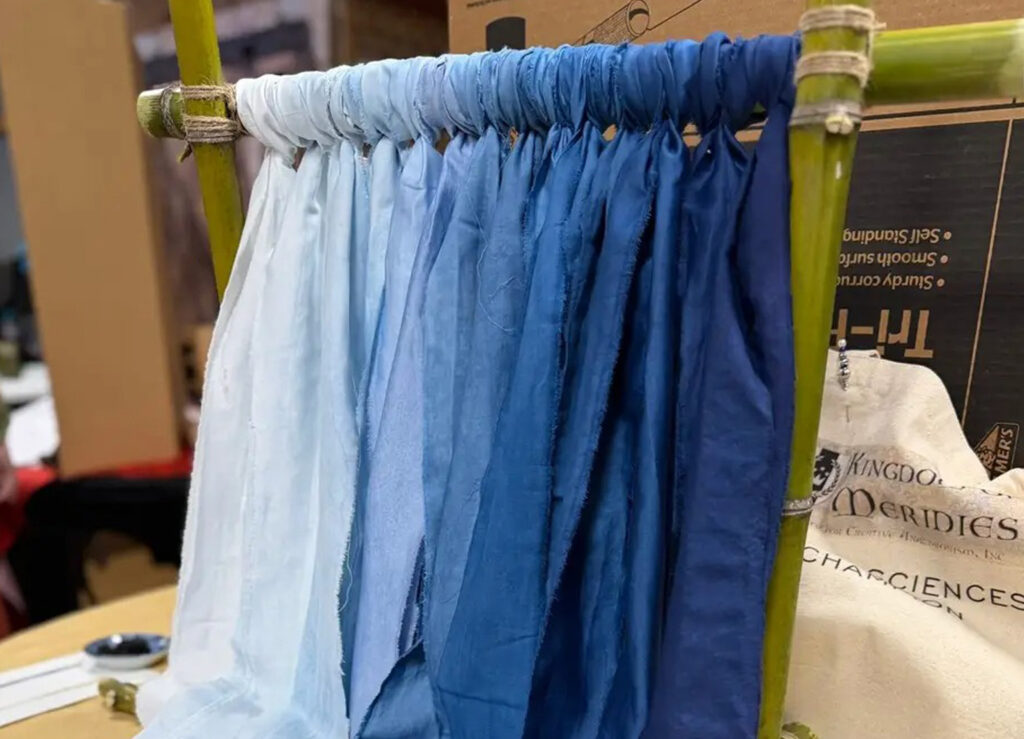
For my attempt to replicate this process, I started from cultivating Persicaria tinctoria from seed in my best approximation of the growing conditions in the region of Japan where sukumo originated. I expanded the plot to include enough indigo plants to hopefully provide enough material to get successful fermentation, harvested, then dried them and built a fermentation pile with them. I then tended this pile daily for around four months until the resulting product showed signs of maturity. Once mature sukumo was achieved, I built two vats using it. One was set up in a small pottery vessel to mimic one of the approaches likely used when sukumo was first developed, and a second larger vat using a plastic vessel to better accommodate whole cloth dyeing. Both vats fermented successfully.