A local group member who was participating in Fall Crown List 2023 asked two of my children to be part of her procession. The theme, as described to me, was “viking” with a purple, black, and white color scheme. Norse clothing in the Viking Age is not an area where I claim anything even remotely close to expertise, so I leaned heavily on information available through details of grave finds.
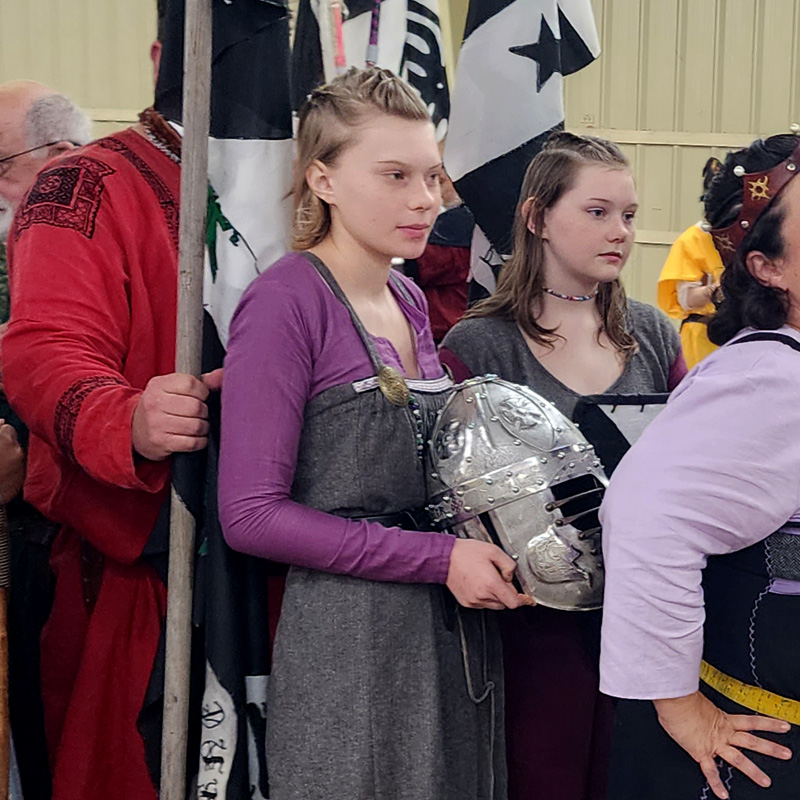
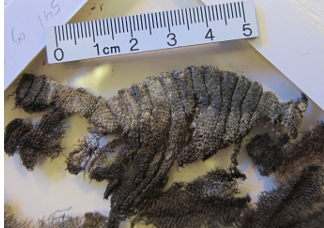
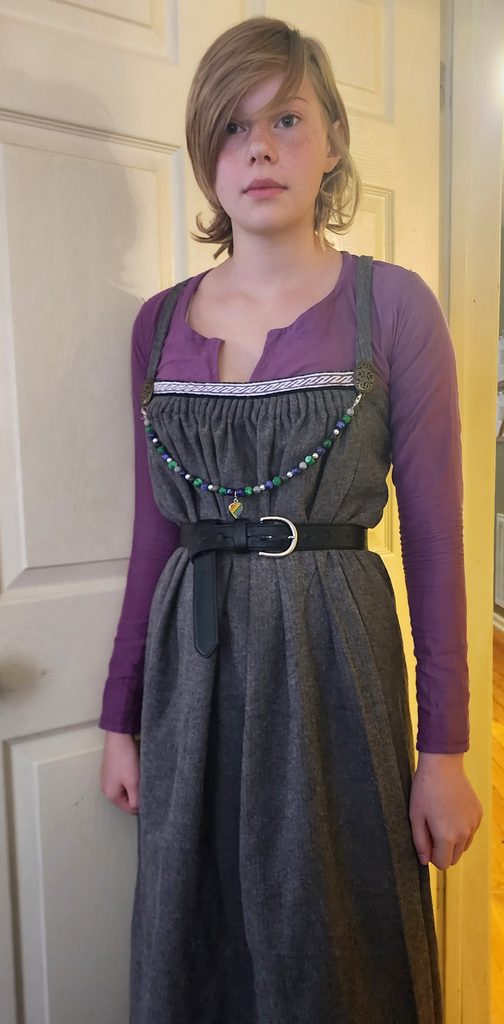
The aprondress fragments from Køstrup grave ACQ1 were particularly interesting to me as I dug through what I could find on fairly short notice. There is pleating still visible on the surviving textile fragments. While I found an abundance of theories about how far down the pleating might extend, I opted to include this as a single line of pleats at the top of the dress only. This had the unintended, but much appreciated perk of creating a garment with a lot of flexibility in sizing that I am finding highly beneficial in a garment made for a teenager who is still actively growing.
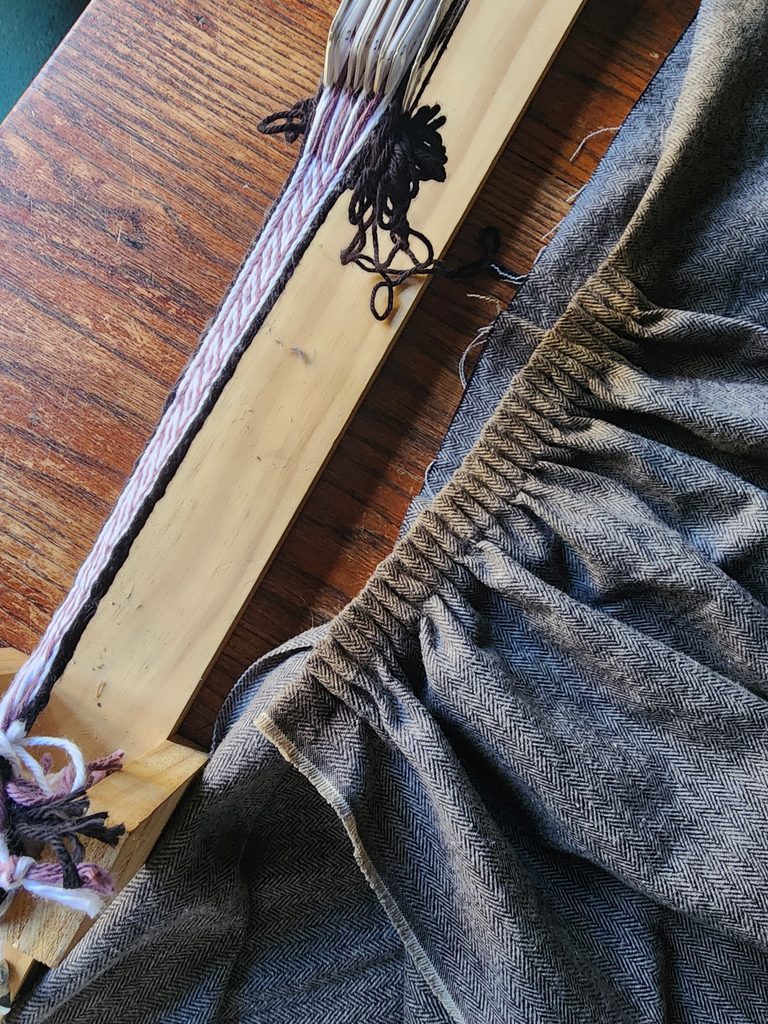
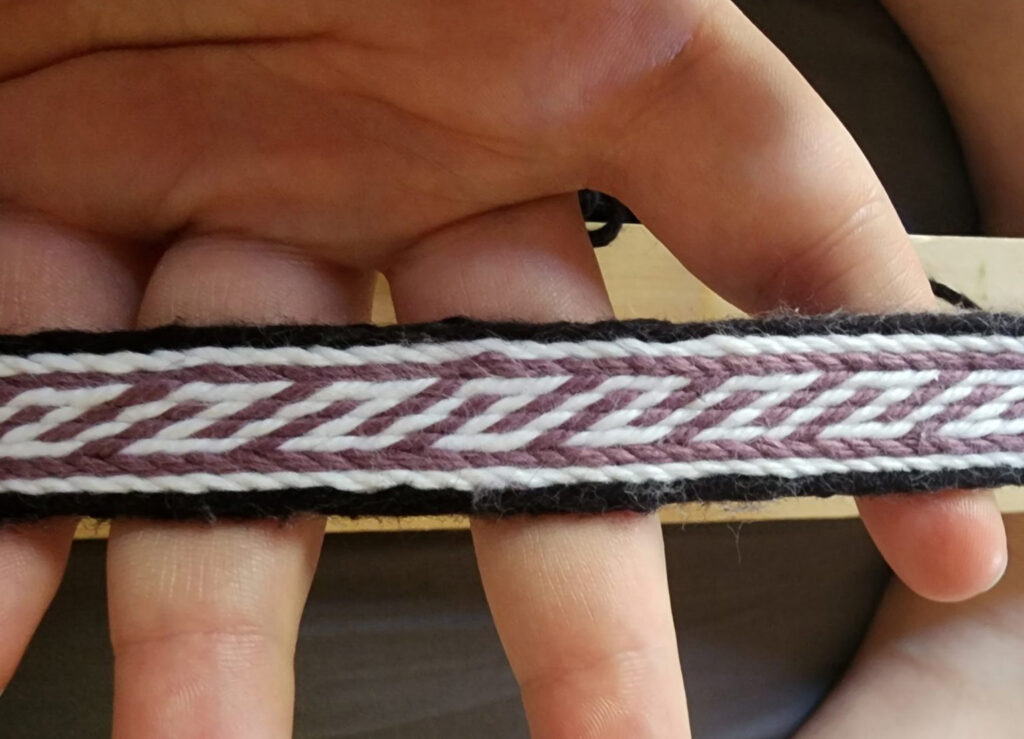
I secured the pleats under a tablet woven band that was primarily included for decoration. I used a motif based on a band found in the Oseburg ship burial. My version of this pattern was made using a much thicker yarn than the original which created a much wider band, so I feel like it is best explained as “loosely inspired by” rather than an attempt at recreation.
The original fragment from Køstrup was wool woven in a tabby weave. I did not have any tabby weave wool in the right color scheme (or in a color that could easily be dyed to fit) on hand, but I did have a broken chevron twill that was black and white. While not from the same site, I was able to find documentation of a small handfull of broken chevron twill textiles at other sites in Viking Age Denmark.2
Overall, I’m happy with this project. It came together well for being researched and assembled on short notice, worked for its intended purpose, and grew the kids’ garb stash in a way that can potentially be made part of a more historically accurate outfit later if they should want to go down that rabbithole.
- https://urd.priv.no/viking/kostrup.html ↩︎
- Jørgensen, L. B. (1986). Forhistoriske Textiler i Skandinavien – Prehistoric Scandinavian Textiles, København.
Jørgensen, L. B. (1991). Textiles and Textile Implements. In: Bencard, M. – Jørgensen, L. B. – Madsen, H. B. (1991). Ribe Excavations 1970-76 – Volume 3, Esbjerg, 59-78. ↩︎