Indigo Cultivation
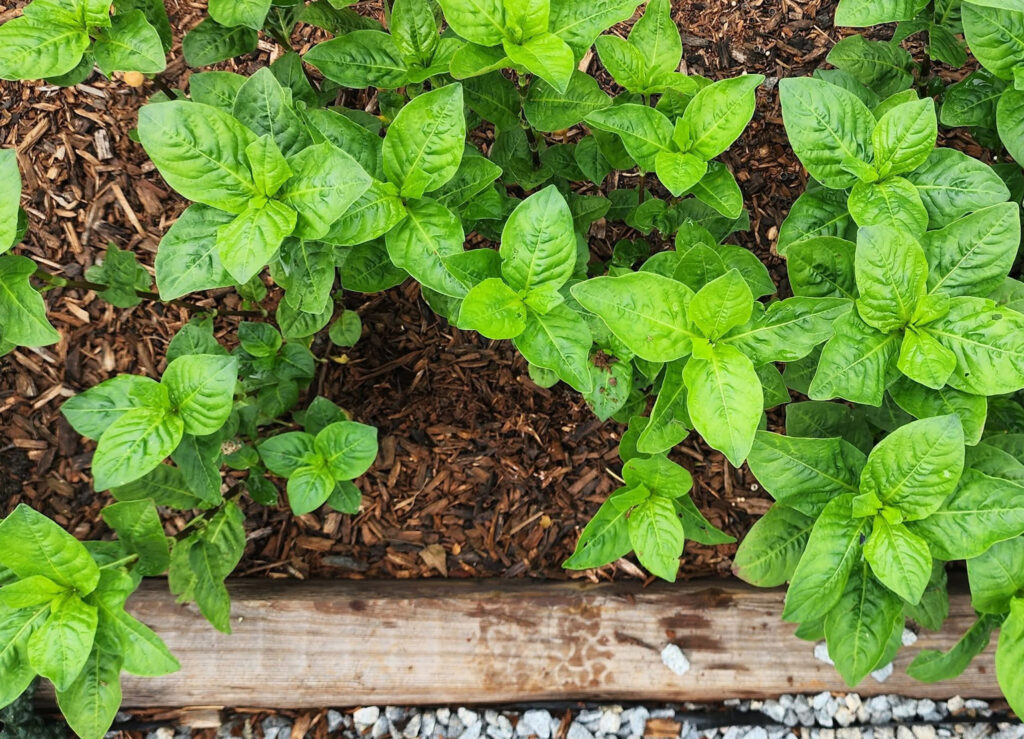
Sukumo starts with the cultivation of the fresh indigo leaves that the process with ultimately extract a blue dye from. While there are multiple plants in existence that can yield indigotin, including indigo and woad, sukumo is always made specifically with Persicaria tinctoria, which is also known by various common names including Japanese Indigo or Dyer’s Knotweed. Persicaria tinctoria is in the plant family Polygonaceae, and has also previously been identified as Polygonum tinctorium. This species of indigoid is a type of knotweed and is is related to buckwheat, unlike the indigoid species more commonly found in southeastern Asia, Indigofera tinctoria, which is related to peas.
Cultivation starts from seed gathered the previous season. Persicaria seeds are short lived, often failing to germinate if they are more than a single season old. Seeds are started in March in Tokushima, which has a mild climate where frosts are unusual. The average low temperature in March in the Awa region of Tokushima prefecture is 42° fahrenheit1. Indigo fields are ideally located in sunny, low lying fields where they can benefit from water accumulation, and nutrient runoff. Japanese Indigo plants can survive in a wide range of conditions, but to produce the greatest amount of dye they need regular water and rich soil. Careful placement of fields creates a more efficient and sustainable approach to cultivation where nature and the topography of the land do the bulk of the work. Per NOAA records, Tokushima historically averages 8-13 days of rain during the growing season, which is enough to render irrigation unnecessary with careful planning, especially after seeds have germinated and plants are established.
Once established, Japanese Indigo plants are aggressive growers, They root easily anywhere the stems become covered in soil, and branches cut from the main plant for leaf harvest will root readily in water. When planted in an ideal location or well maintained in a less ideal one, leaves can be harvested at least twice during the growing season. The indigotin content in the leaves reaches its peak just before the plants flower, but flowering rapidly diminishes it. Once flowers are set, little to no indigotin can be extracted from the leaves. Excessive stress to the plants from factors like drought or pest pressure can result in premature flowering. Day length and temperature are primary triggers for flowering, which typically occurs in the fall as daylight hours shorten and weather cools. Some growers have noted that unusual temperature variations have overridden daylight hour changes and triggered unusually late or early flowering2. Both of these situations are to be avoided. Indigo that flowers early will not develop sufficient dye content, but indigo that flowers late may not have time to set seed for the following year before winter temperatures set in.
Technique for Creating Sukumo
Japanese Indigo leaves may be harvest multiple times during the growing season, but the last harvest is the one used for sukumo. The specific conditions required to make sukumo follow a progression that begins in the fall. Leaves harvested at this time will be at their best for indogotin content, but it is also the point in the year where environmental factors are in the correct range for the sukumo making process, and are likely to remain so for the 100 or more days it takes to turn Persicaria tinctoria leaves into mature sukumo. These factors include both temperature and humidity. The indigo leaves will need to stay damp, but not saturated in an environment that is cool, but does not freeze for the entire 100 days.
The year’s last harvest of indigo leaves are picked in September or October. This can involve picking individual leaves, or cutting full branches from the plants. Picking leaves removes the need to separate them from stems later and leaves more of the plant to flower and create next year’s seeds, but it a much slower process. Cutting branches is a faster harvesting technique that does not fully prevent the flowering and seed setting process, but may need to be done earlier to give the plant recovery time, and requires a winnowing process after drying to remove stems.
To begin the process of turning the harvest into sukumo, the plant material must first be dried. The harvest is laid out to dry for around two days, during which they are repeatedly turned with a wooden rake and a broom to improve air flow and create a more uniform result. The dried leaves are then formed into a pile, sprinkled with rain or spring water, covered, and left to partially decompose. The process requires a substantial harvest to be successful. Sukomo will only be created if the pile of indigo leaves is large enough to create enough heat as it breaks down. The covering may involve multiple layers. While different artisans note using different materials, some of the options for covering the pile include straw, oak leaves, futon mattresses, woven straw mats, and heavy canvas cloths. This covering helps regulate temperature and humidity, as well as minimizing air flow through pile. While occasional exposure to air is part of this process, the technique requires mostly anaerobic conditions.
The pile will create much of its own heat, especially in the early days of the process, but prolonged exposure to excessive heat is more likely to result in mature compost than mature sukumo. Excess moisture will result in rot, but a pile that is too dry with not grow the microbial culture required to facilitate the fermentation that will eventually transform the mature sukumo into a functional indigo dye vat for aizome. Clumps that become tightly packed can result in inconsistent conditions through the pile. Periodically the pile needs to be pulled apart, clumps manually broken down, then the pile reformed and recovered. This also turns the pile each time it is done.
While sukumo making has some basic concepts to it, the artistry of the technique shows itself most clearly in the lack of specific values attached to each part of this process. There are no guides to specific temperature, relative humidity, or proportions. Instead, this is the cultivation of a living culture within the controlled decomposition of the indigo leaves, which come together to create so many variables that the technique largely depends on the maker using all of their senses to monitor progress and the needs of the pile, making adjustments accordingly. The process is guided by feel, scent, visual assessment, and scent. Some traditional makers even use taste as an assessment tool. Experience and attention to detail are the primary tools.
For at least 100 days, this pile of leaves needs to be checked daily, turned periodically, occasionally watered again, then carefully reformed as needed, and recovered. A successful sukumo pile will grow a kind of white mold, develop a notable smell of ammonia, and the temperature of the pile will rise enough that it begins to give off steam. Over time the smell should shift from a sharp ammonia scent to a more earthy scent with only a hint of ammonia. The sukumo can also be tested by rubbing it against paper. When not yet ready, it will transfer a green color, but once mature it will appear black or brown.
Microbiology of Sukumo and Comparison to Woad Couching
The process of creating sukumo with indigo leaves bears many similarities to the process of woad couching, or the creation of woad balls, that developed in western Europe. Both involve the crushed leaves of their specific indigoid plant being crushed, then piled up to go through a controlled period of composting in warm, damp conditions. Both techniques create a portable trade good that also allows for both the preservation of the dye stuff and for the microbial cultures within the dyestuff to serve as the starter culture for a fermentation based dye vat.
While vats can be created through fermentation for woad or indigo without the couching or sukumo process, starting that fermentation can be complicated and reliant on largely uncontrollable factors including the presence of the right microbes in the right proportions in the environment. Additionally, if the plant material is heated excessively, the less desirable microbes may be minimized, but the needed cultures will as well. Even if a vat is successfully started under these conditions, it is unlikely to be stable and capable of sustaining the lasting activity needed to keep the vat functional over time. Each use of a vat introduces new bacterial cultures and shifts the pH, while the fermentation process itself changes over time. Maintaining a healthy fermentation vat is difficult and often requires daily maintenance. To keep a vat usable for the most time possible, getting a healthy vat at the start of the process is imperative.
Both woad couching and sukumo offer a solution to these issues. The composting process is driven by specific microbial cultures that then inoculate any vat that they are used to start. This creates a more controlled starting culture of anaerobic bacteria that thrived among indigoid plant material during the composting stage of both processes. A bacterium named Bacillus alkaliphiles has been identified as an indigo reducing strain in sukumo, while a bacterium named Clostridium isatidis has been identified in couched woad. While the two do not behave exactly the same or thrive under the exact same conditions, both are gram negative bacteria that thrive in anaerobic environments5.
1Source: NOAA
2Walker, A. Premature Flowering in Japanese Indigo; (https://www.naturesrainbow.co.uk/2019/06/premature-flowering-in-japanese-indigo/) accessed 5/10/2025.
3Aino Keiichi , Hirota Kikue , Okamoto Takahiro , Tu Zhihao , Matsuyama Hidetoshi , Yumoto Isao. Microbial Communities Associated With Indigo Fermentation That Thrive in Anaerobic Alkaline Environments. Frontiers in Microbiology, Volume 9, 2018: DOI 10.3389/fmicb.2018.02196
4Yi, C., Tan, X., Bie, B. et al. Practical and environment-friendly indirect electrochemical reduction of indigo and dyeing. Sci Rep 10, 4927 (2020). https://doi.org/10.1038/s41598-020-61795-5
5Aino Keiichi , Hirota Kikue , Okamoto Takahiro , Tu Zhihao , Matsuyama Hidetoshi , Yumoto Isao. Microbial Communities Associated With Indigo Fermentation That Thrive in Anaerobic Alkaline Environments. Frontiers in Microbiology, Volume 9, 2018: DOI 10.3389/fmicb.2018.02196