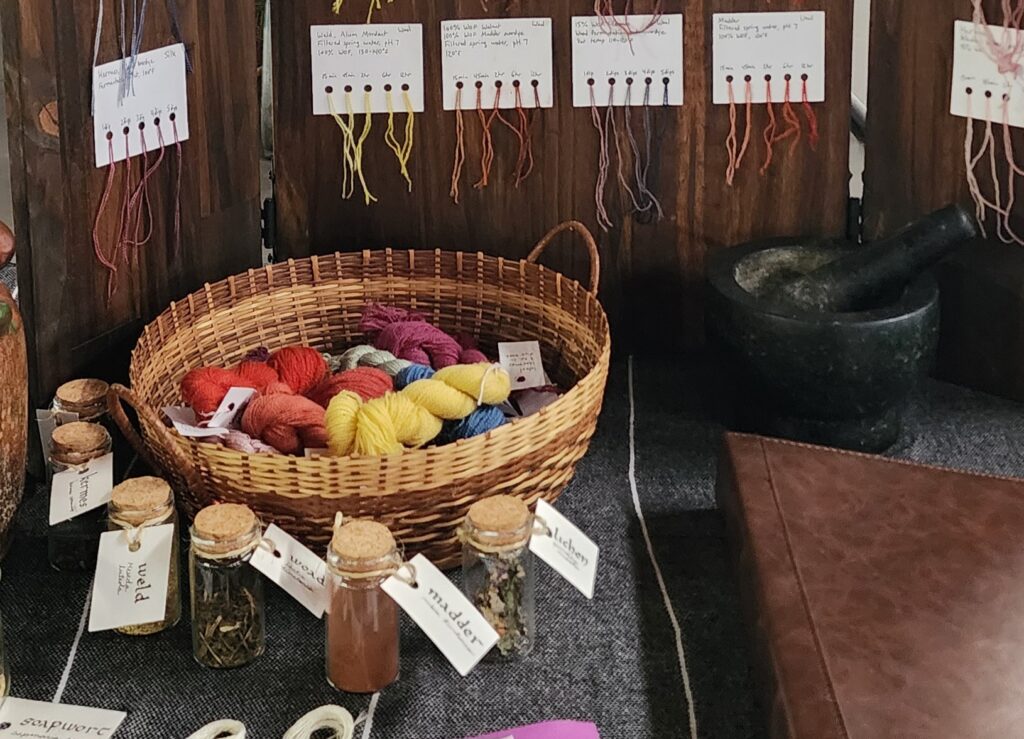
Note: This is post 1 of 4 on this project. Links to all related posts can be found below.
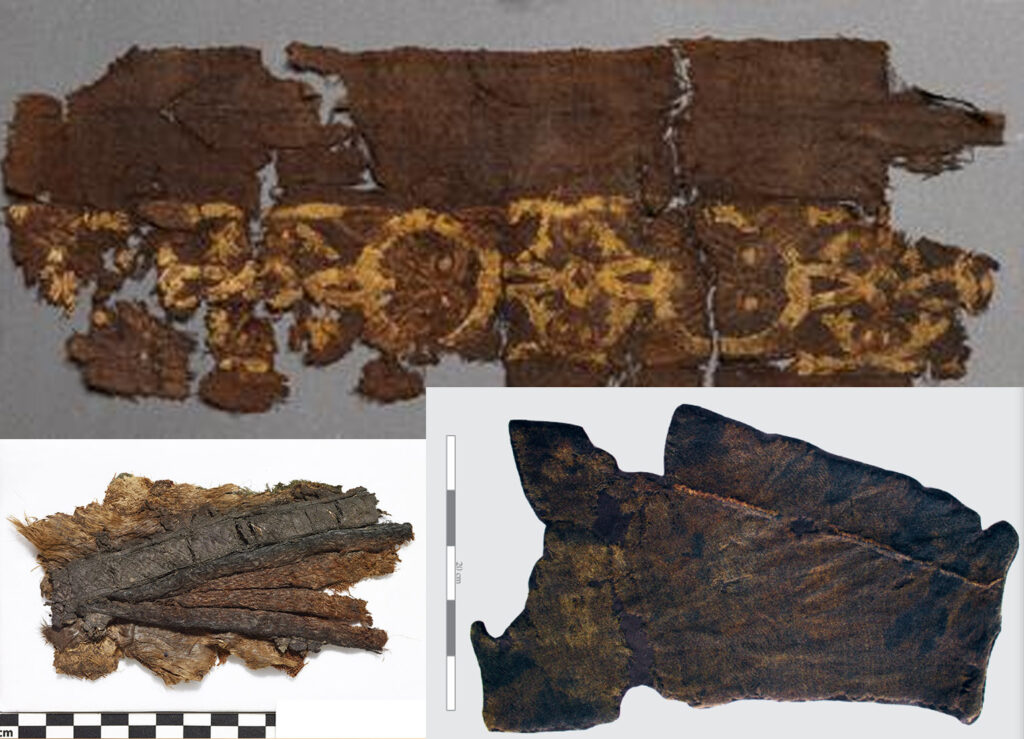
While modern media often portrays the past as being a time of muddy colored clothing, and extant textiles are often darkened by time and low saturation in appearance, a closer look at the evidence suggests history was far more colorful. Research has been done into the use of textile dyes across many times and places, but for this project I have attempted to recreate the textile color palette of Norse settlements across Northern Europe at the end of the Viking Era. The textile samples I have sought to emulate include Scandinavian, Anglo-Scandinavian, and Hiberno-Norse finds. I focused primarily on the 10th century, however the archaeological evidence for some of these finds suggests they may be as early as the 9th century or as late as the 12th.
In this project, I utilized data from textile samples found in Dublin, York, Gokstad, Bjerringhøj (commonly known as the Mammen grave), Hvilehøj and Hedeby. The majority of the samples were wool, with silk being the second most common material, and one textile sample being an unspecified plant fiber that is most likely linen. The plant fiber sample did not show evidence of having been dyed. The earliest analysis data set I referenced was performed in the 1990’s using spectrophotometry, sometimes combined with thin layer chromatography (TLC). The more recent analyses referenced were done using reversed-phase high-performance liquid chromatography and photo diode array detection (HPLC-DAD). Across all of these samples, woad, madder, and weld were the most common materials identified. Evidence of yellow dyes of unknown origin were also identified1, possibly from tansy or chamomile, but many plants native to these regions are well known to be easily extracted as yellow dyes. Evidence was also found of lichen dyes, walnut, and scale insect dyes like kermes.
Evidence of the use of mordants was found in some samples. The most common of these was clubmoss, which was likely used as a period source of alum2. As many clubmoss species are protected, I have opted for potassium alum. Other suspected mordants with some evidence available include tannins and iron3. While not every fiber sample was mordanted with alum, I mordanted those that were in a large batch before I began organizing dye pots, hung them to dry, and used as needed.
Of the textiles analyzed, several were embroidery threads or woven items with different dye analysis results seen on warp versus weft threads. While dying roving may have been practiced at times, the best evidence of the specifics of when fiber was dyed in the textile production process in 10th century Norse settlements is primarily in the form of manuscript illuminations that show pale, seemingly undyed fiber being spun. These manuscript illuminations, however, are all later period, originate from other cultural groups in adjacent areas of northwestern Europe, or both which makes this largely speculative. Based on this evidence that yarn dying was a probable common practice, I have opted to dye yarn samples instead of roving or fabric samples for this project. The original textiles would have been handspun from imported silk or local fleeces, but as this project was focused on dying, not fiber production, I have opted for machine spun sheep wool and silk thread.
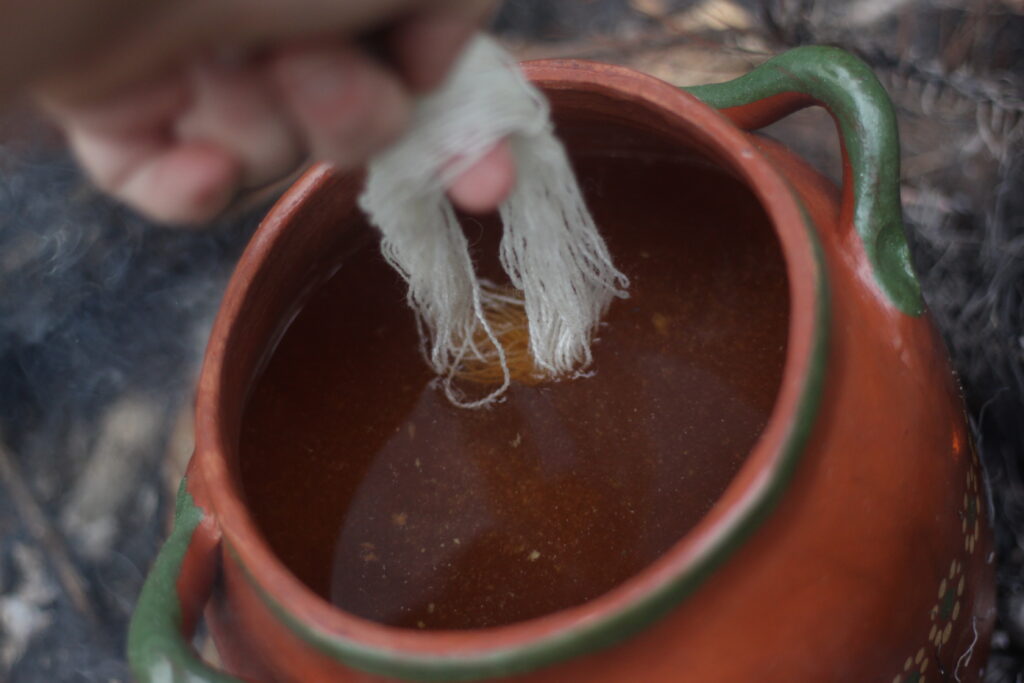
To prepare my fiber for dye, I created a sudsy mix to help remove any lingering oils on the surface by utilizing soapwort. This was a choice based on plausible availability, as I was unable to find clear evidence of what may have been used to scour fiber in period. Soapwort is known to be a garden plant in medieval northern Europe, likely used for laundering textiles4. I poured boiling water over soapwort, then stirred until suds appeared. All skeins of yarn were washed with this liquid before mordanting or being added to the dye bath. Fiber samples were then submerged in clean water for at least 8 hours to saturate them.
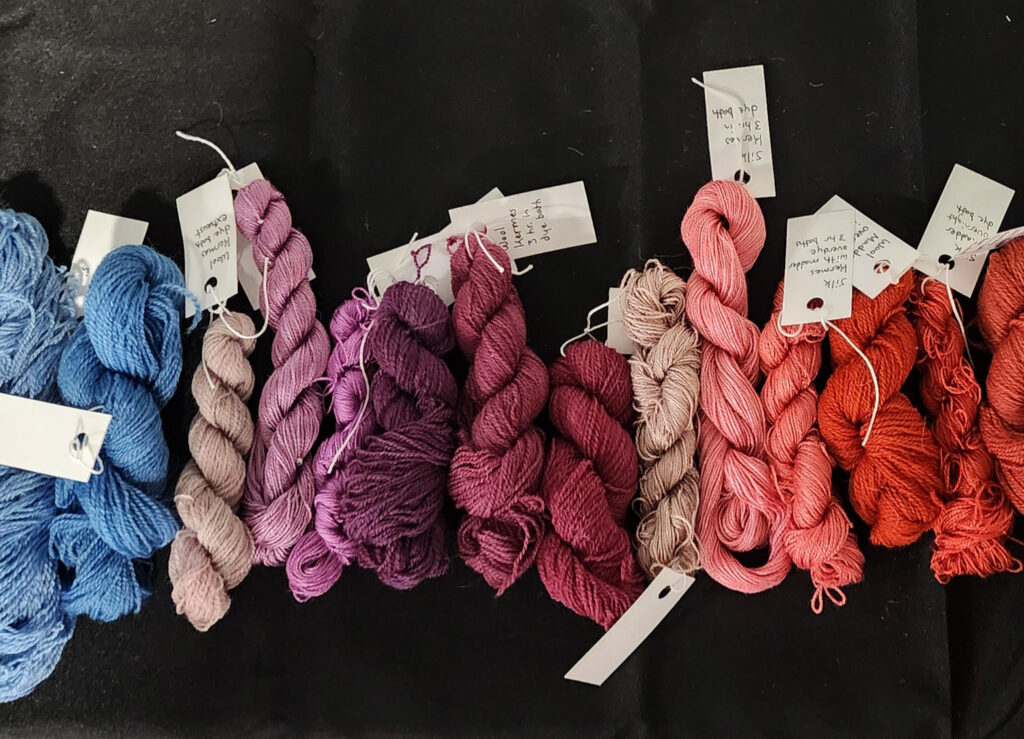
Rich primary colors dominated the results of these dye samples. Bright reds, yellows, and blues made up the majority, in addition to purple shades, rusty oranges, warm browns, and an assortment of pastels. The idea that textiles from the early middle ages were drab, muddy colors does not align with the results these dye stuffs produced.
1 Taylor, G. W. “Detection and Identification of Dyes on Anglo-Scandinavian Textiles.” Studies in Conservation, vol. 28, no. 4, 1983, pp. 153–60.
2 Ina Vanden Berghe, Ulla Mannering, Charlotte Rimstad, “New dye analyses of Danish Viking Age textiles from Bjerringhøj , Hvilehøj, and Hedeby”, Journal of Archaeological Science: Reports, Volume 49, 2023.
3 Taylor, G. W. “Detection and Identification of Dyes on Anglo-Scandinavian Textiles.” Studies in Conservation, vol. 28, no. 4, 1983, pp. 153–60.
4Åsen PA. Medieval Monastery Gardens in Iceland and Norway. Religions. 2021; 12(5):317.